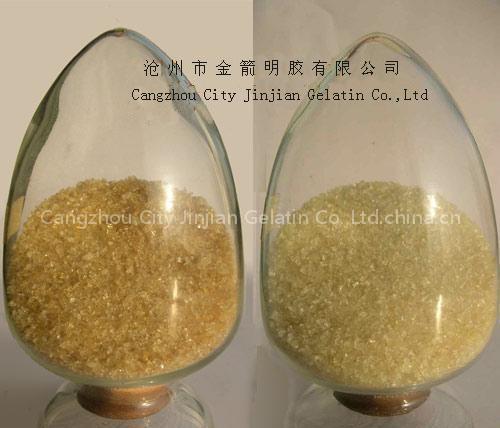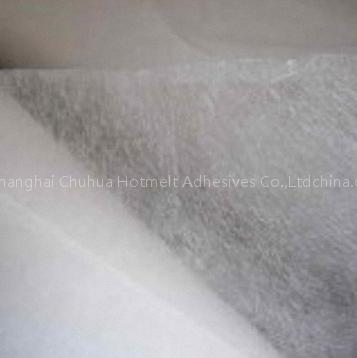
hot melt adhesive film/webs
Specifications
- Origin
- China (Mainland)
- Price Term
- FOB
hot melt adhesive film/webs is a Adhesives & Sealants product. Key specs — Origin: China (Mainland); Price Term: FOB.
Product Description
The bonds created by these adhesives are maintained up to the melt point of the adhesives, generally 105°C to 135°C. The bonds retain flexibility over years without becoming brittle. Co-polyamides are resistant to exposure to chemical, detergent or solvents.
Co-polyamide adhesives are compatible with most porous substrates and some non-porous substrates. Most woven and non-woven fabrics, foams, papers and wood are well suited to co-polyamides adhesion. Non-porous substrates would include plastic and metal.
Webs, nets and films made from co-polyamides are dry, free rolling and non-tacky at room temperature. They are generally packaged on rolls which may use a release sheet - depending on the extrusion conditions of the original web, net or film. The inherent flexibility and elongation, of rolled co-polyamide webs, films or nets, allows easy feeding into process equipment.
- Co-polyamides are inherently thermally stable and able to withstand high processing temperatures. Color stability in the absence of oxygen (air) is excellent.
- Co-polyamides are suitable for conversion to film, web and net by all conventional extrusion techniques.
- Co-polyamides processed as cast film are normally extruded onto a carrier such as release paper or polyethylene film. After solidifying, the carrier can be stripped for reuse and the copolyamide can be rolled without blocking. Alternatively, the carrier can remain in place until the final process.
- Co-polyamides can be extrusion coated directly onto a substrate such as a non-woven that becomes part of the final assembly.
Extruder Design:
Extruders with L/D (length to diameter ratio) of 20 to 30+ are commonly used. The higher L/D ratios, as usual, give better output stability. Extruders in the range of L/D=20 will have improved feed using a grooved feed throat.
Typical nylon screw designs are successful with copolyamides. These include feed zones of at least 8 turns, transition zones of at least 4 turns, metering zones of at least 8 turns, and a compression ratio in the range of 2:1 to 3:1. Both single and double stage screws are used.
Cast/Blown Film:
Most copolyamides process into film at melt temperatures 30° C to 60° C above their melting point. Feed zone temperatures are usually set about 50° C below the melting point.
Melt Blown Web:
The key to a good melt blown web is to have an apparent viscosity low enough to get good fiber formation before significant cooling occurs. Copolyamide melt temperatures in the range of 100° C to 150° C above the melting point are commonly used. Hot Air temperatures for the blowing process are in the range of 300° C - 350° C.
Auxiliary Equipment:
Copolyamides are more or less hydroscopic depending on their composition. Some products can absorb about 1.5% of water at 50% relative humidity and room temperature. At normal extrusion temperatures, absorbed water does not cause hydrolysis or molecular weight decrease. Absorbed water does, however, create blemishes and holes in films due to steam expansion. A recommended maximum water content for problem free extrusion is 0.15%.