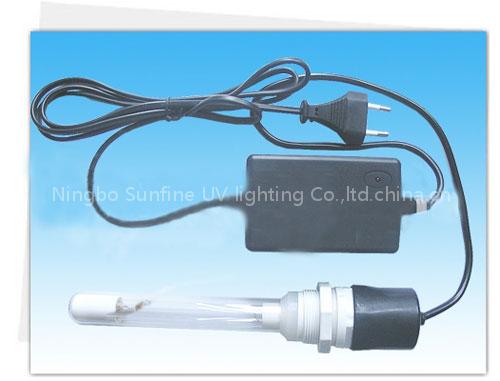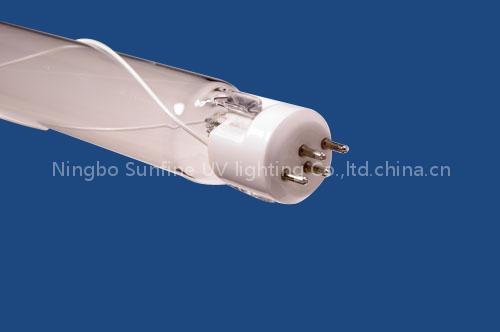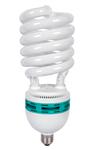
energy saving lamp is a Energy Saving & Fluorescent product. Key specs — Origin: Shanghai, China.
Product Description
The is available usually in these color temperatures:
Warm white (2700K)
Cool white (4000K)
Daylight (6000K)
How They Work
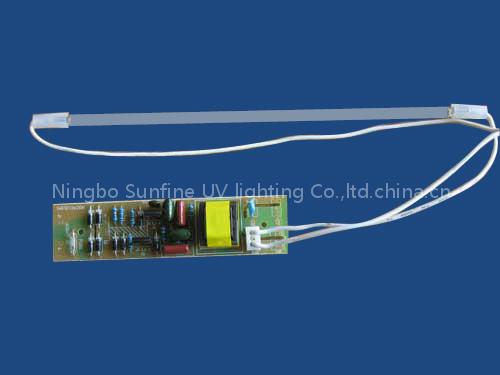
CFLs work much like standard . They consist of two parts: a gas-filled tube, and a magnetic or electronic ballast. The gas in the tube glows with ultraviolet light when electricity from the ballast flows through it. This in turn excites a white phosphor coating on the inside of the tube, which emits visible light throughout the surface of the tube.
CFLs with magnetic ballasts flicker slightly when they start. They are also heavier than those with electronic ballasts. This may make them too heavy for some light fixtures. Electronic ballasts are more expensive, but light immediately (especially at low temperatures). They are also more efficient than magnetic ballasts. The tubes will last about 10,000 hours and the ballast about 50,000 hours. Most currently available CFLs have electronic ballasts.
CFL BACKGROUND
Color temperature: The lower the color temperature, the warmer the light. Warmness (red) or coolness (blue) can be measured in degrees Kelvin by a chroma meter. We observed a temperature of about 2700 K for soft white bulbs, whereas "daylight" bulbs measured around 3400 K -- real noontime sunlight ranges from 5000 K to 6500 K.
Lumens vs. lux: Manufacturers use a complex process to measure lumens, the total quantity of light emitted by a bulb. We used a light and chroma meter to measure lux, the light intensity a bulb shines on a surface. Our observed results in lux generally tracked with manufacturers' lumen ratings.
Watts and efficiency: Our wattage results were all within 3 watts of manufacturer ratings -- but all e use about 70 percent less electricity than incandescent bulbs. The average U.S. household has 45 light bulbs -- replacing that number of 75-watt incandescent bulbs with CFLs would save $180 per year.
Phosphor: This chemical compound lines the inside of CFL tubing. When excited, it converts ultraviolet radiation into visible light. The chemical composition of the phosphor determines the color temperature of the light emitted by the bulb.
Mercury: According to the EPA, CFLs contain an average of 5 milligrams of mercury, which increases the bulb's efficiency. But that also means you can't just trash them--CFLs must be properly recycled. Visit Energy Star or Earth 911 for disposal instructions.