

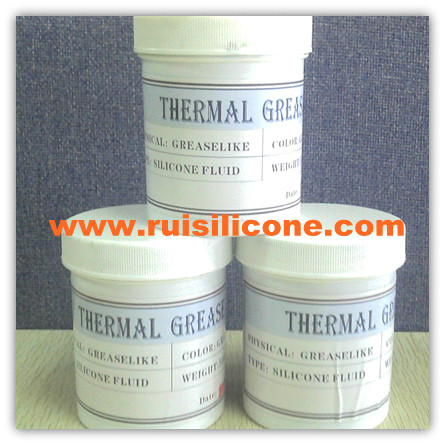
Thermally conductive compound
Specifications
- Origin
- China
- Price Term
- EX-Work
- Payment Term
- T/T
Thermally conductive compound is a Other Organic Chemical product. Key specs — Origin: China; Price Term: EX-Work; Payment Term: T/T.
Product Description
Description Composition: Metal Oxide Compounds: 60% Carbon Compounds: 20% Silicone Compounds: 20%
Thermally conductive compound RJ-728B is specially formulated for thermal performance.
Material Properties Property Typical Values Color Gray Thermal Impedance, 25°C 0.11 C-in /w Dielectric Constant, 100HZ 7 Dielectric Dissipation Factor, 100HZ 0.010 Thermal Conductivity 3.5W/m-k Thixotropic Index, 25°C 320-380 1/10mm Specific Gravity, 25°C 2.1 Oil Separation, 200°C/24Hours <0.05% Volatile Content, 200°C/24Hours <0.001% Usage Temperature Range -55°C to +300°C
Product Features Excellent thermal conductivity, good electrical insulation Good resistance to low and high temperature(-55°C to +300°C) It will not dry, curing, melt for long-term placement Non-toxic, odorless, no corrosion Good spreadability
Applications Some typical uses include:
CPU chip Electric iron Water dispenser Television Air conditioner Power modules Heat sink Diode Triode Any interface that requires a high performance thermal grease
Recommended Usage Apply a controlled amount of thermally conductive compound RJ-728B to substrate, compress to a thin bond line and properly wet the surface.
Package Available in 500g/can, 1kg/can, 40kg/drum. Syringe Package: 5g, 10g, 20g, 30g. Product quality, Storage and Handling 1.Shelf life: 18 months. 2.Transported as non-hazardous chemicals.
Notice: Although every effort has been made to ensure that the information contained in this data sheet is reliable, we cannot be held responsible for the correctness of the information or for any loss, injury or damage which may result from its use. Also suggestions of uses should not be taken as inducements to infringe any particular patent.


