

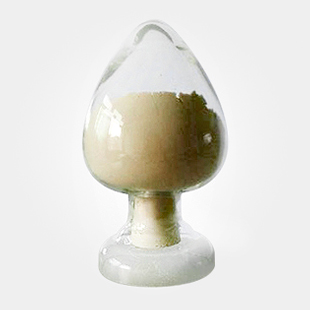
Sodium hydride
Specifications
- Brand
- nanjian
- Origin
- hubei china
- MOQ
- 1kg
- Packaging
- 25kg/drum
- Price Term
- EXW/EX-Work,FOB
- Payment Term
- T/T,L/C,Western Union
- Supply Ability
- 1000kg
- Delivery Time
- T/T, WU
- Loading Ports
- wuhan
Sodium hydride is a Chemicals product. Key specs — Brand: nanjian; Origin: hubei china; MOQ: 1kg; Packaging: 25kg/drum.
Product Description
Sodium hydride Synonyms: SODIUM HYDRIDE;SODIUM HYDRIDE DISPERSION;NAH 80;nah80;Sodium hydride (NaH);sodiumhydride(nah);sodiumhydride[nah];sodiummonohydride
CAS: 7646-69-7
MF: HNa
MW: 24
EINECS: 231-587-3
Chemical Properties Grey solid
General Description A silvery to whitish powder or slurry in oil. Used to make other chemicals.
Air & Water Reactions Highly flammable. Ignites or explodes in contact with air of high humidity [Bretherick 1979 p. 107]. Reacts violently with water producing a caustic solution (NaOH) and hydrogen (H2). Heat of reaction may ignite the hydrogen.
Reactivity Profile Sodium hydride is a powerful reducing agent. Attacks SiO2 in glass. Ignites on contact with gaseous F2, Cl2, Br2, and I2 (the last at temperatures exceeding 100°C), especially in the presence of moisture, to form HF, HCl, HBr, and HI [Mellor 2:483 1946-47]. Reacts with sulfur to give Na2S and H2S [Bretherick 1979 p. 107]. Can react explosively with dimethyl sulfoxide [Chem. Eng. News 44(24):7 1966]. Reacts vigorously with acetylene, even at -60°C [Mellor 2:483 1946-47]. Spontaneously flammable in fluorine. Reaction with dimethylformamide, when heated, runs away [Chem. Eng. News, 1982, 60(28), 5]. Initiates a polymerization reaction in ethyl-2,2,3-trifluoropropionate such that the ester decomposed violently [Bretherick 5th ed. 1995]. Presence in the reaction of diethyl succinate and ethyl trifluoroacetate, has twice caused explosions [Chem. Brit., 1983, 19, 645].
Health Hazard SOLID: Will burn skin and eyes. Harmful if swallowed.
Fire Hazard FLAMMABLE. MAY EXPLODE ON CONTACT WITH WATER. Accidental contact with water used to extinguish surrounding fire will result in the release of hydrogen gas and possible explosion.
Related Products
 1-Isobutyl-2-MethyliMidazole 116680-33-2
 1-(4-Bromobenzyl)-2-butyl-4-chloro-1H-imidazole-5-methanol
 Climbazole 38083-17-9
 4-Methyl-2-phenylimidazole 827-43-0
 1-Benzyl-2-methylimidazole 13750-62-4
 Oxymetholone 434-07-1 Anabolic Steroid Powder Anadrol Powder Pharmaceutical Material
 Primobolan 434-05-9 Nandrolone Powder Pituitary Growth Hormone Methenolone Acetate
 Methenolone Enanthate Primobolan Enanthate Raw Steroid Nandrolone Powder 303-42-4