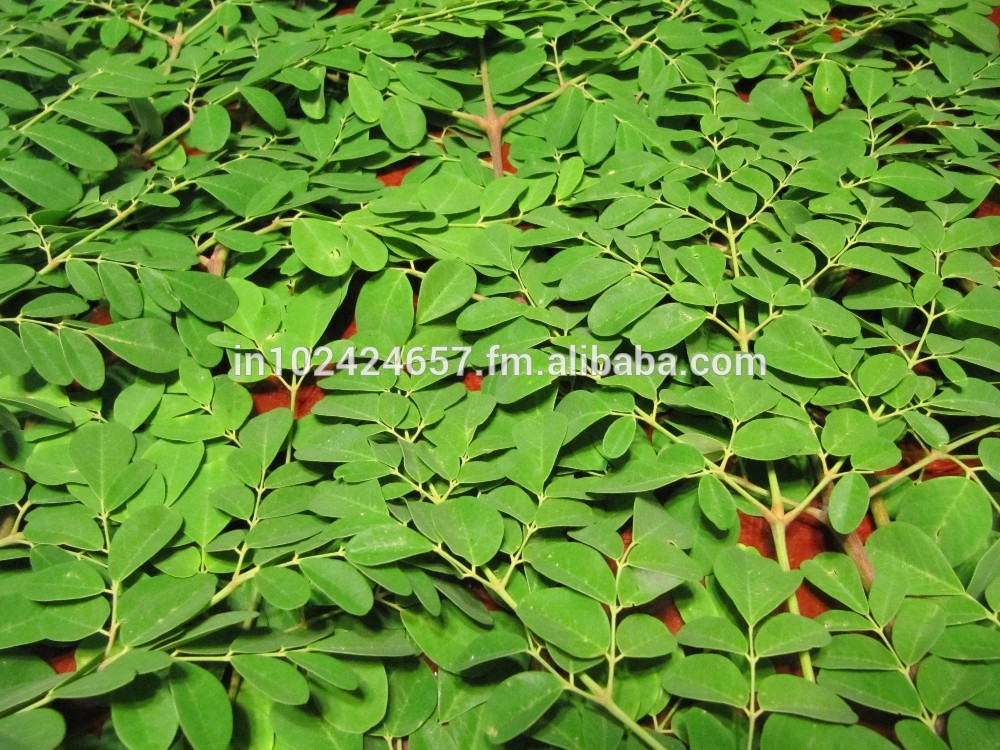
Moringa oleifera - Seeds, Leaves & Oil
Specifications
- Brand
- Nature Herbs
- Origin
- India
- Certifications
- ISO
- MOQ
- 10 Kilogram/Kilograms
- Packaging
- kilograms
- Price Term
- EXW/EX-Work,FOB
- Payment Term
- T/T,L/C,Western Union
- Supply Ability
- 20,000 Kilogram/Kilograms per Year
- Delivery Time
- 15 Days
Moringa oleifera - Seeds, Leaves & Oil is a Plant Extract product. Key specs — Brand: Nature Herbs; Origin: India; Certifications: ISO; MOQ: 10 Kilogram/Kilograms.
Product Description
SOCIO-ECONOMIC IMPORTANCE Moringa is one of the most useful tropical trees. The relative ease with which it propagates through both sexual and asexual means and its low demand for soil nutrients and water after being planted make its production and management easy.
Introduction of this plant into a farm which has a biodiverse environment can be beneficial for both the owner of the farm and the surrounding eco-system. Moringa is a fast growing, perennial tree which can reach a maximum height of 7-12 m and a diameter of 20-40 cm at chest height. Stem The stem is normally straight but occasionally is poorly formed.
The tree grows with a short, straight stem that reaches a height of 1.5-2 m before it begins branching but can reach up to 3,0 m. Branch The extended branches grow in a disorganized manner and the canopy is umbrella shaped. Leaves The alternate, twice or thrice pinnate leaves grow mostly at the branch tips.
They are 20-70 cm long, grayish-downy when young, long petiole with 8-10 pairs of pinnae each bearing two pairs of opposite, elliptic or obovate leaflets and one at the apex, all 1-2 cm long; with glands at the bases of the petioles and pinnae.
Flowers The flowers, which are pleasantly fragrant, and 2.5 cm wide are produced profusely in axillary, drooping panicles 10 to 25 cm long. They are white or cream colored and yellow-dotted at the base. The five reflexed sepals are linear-lanceolate. The five petals are slender-spatulate.
They surround the five stamens and five staminodes and are reflexed except for the lowest (Morton, 1991). Fruits The fruits are three lobed pods which hang down from the branches and are 20-60 cm in length. When they are dry they open into 3 parts. Each pod contains between 12 and 35 seeds. Seeds The seeds are round with a brownish semi-permeable seed hull.
The hull itself has three white wings that run from top to bottom at 120-degree intervals. Each tree can produce between 15,000 and 25,000 seeds/year. The average weight per seed is 0.3 g and the kernel to hull ratio is 75 : 25 (Makkar and Becker, 1997). Physical characterization of pods and seeds are given in Table 1.
Physical properties of pods and seeds of Moringa Determination 1 2 3 Average weight of pod (g) 7.60 - 7.95 Average weight of seeds (g) / pod 3.59 5.03 4.83 Average number of seeds / pod 12 17 16 Average weight (g) / 100 seeds 29.9 29.6 30.2 Average weight of kernels (g) / 100 seeds 21.2 - 22.5 Percent weight of kernel in relation to entire seed 72.5 - 74.5 Percent weight of hull in relation to entire seed 27.5 - 25.5 Moisture in kernel (%) 4.5 - 6.5 Moisture in hull (%) 9.2 - 12.9 Moisture in whole seed (%) 5.8 - 7.5 Human consumption of Moringa The young leaves are edible and are commonly cooked and eaten like spinach or used to make soups and salads.
They are an exceptionally good source of provitamin A, vitamins B, and C, minerals (in particular iron), and the sulphur-containing amino acids methionine and cystine. The composition of the amino acids in the leaf protein is well balanced (see below).
Mineral contents of Moringa leaves from different agroclimatic origins (Becker and Makkar, unpublished) Mineral Nicaragua India Niger Macro elements (g kg-1 DM) Calcium 17.5 26.4 13.9 Phosphorus 1.16 1.36 1.22 Magnesium 0.11 0.11 0.11 Sodium 1.16 2.73 2.61 Potassium 19.1 21.7 18.4 Micro-elements (mg kg-1 DM) Iron 582 175 347 Magense 47.1 51.8 113.9 Zinc 13.5 13.7 24.2 Copper 11.2 7.1 10.6 Carotenoids in different morphological fractions of Moringa (Becker and Makkar, unpublished) Carotenoid Morphological Fraction Leaves Stem Seed (mg kg-1 DM) alpha-Carotene 6.5 n.d. n.d.
Beta-Carotene 401 n.d. 3.8 Echinenon n.d. n.d. n.d. Fucoxanthin n.d. n.d. n.d. Lutein 702 21.8 4.0 Myxoxanthophyll n.d. n.d. n.d. Neoxanthin 219 5.9 n.d. Violaxanthin 76.5 1.3 n.d. Zeaxanthin 19.4 n.d. n.d. Xanthophyll 83.1 1.6 n.d.
Carotenoids 1508 34.4 4.0 Chlorophyll 6890 271.1 n.d. n.d. not detected Industrial uses of moringa oil The oil content of de-hulled seed (kernel) is approximately 42 %. The oil is brilliant yellow. It is used as a lubricant for fine machinery such as timepieces because it has little tendency to deteriorate and become rancid and sticky.
It is also useful as a vegetable cooking oil. The oil is known for its capacity to absorb and retain volatile substances and is therefore valuable in the perfume industry for stabilising scents. The free fatty acid content varies from 0.5 to 3 %. acids. It has a particularly high level of oleic acid (70 %).
Other vegetable oils normally contain only about 40 % oleic acid.
Physico-chemical properties and fatty acid composition of Moringa seed oil Property Value Saponification value 182.9 Iodine value 66.4 Density at 20 ºC (g/ml) 0.89737 Refractive Index at 20 ºC 1.4670 Solidification Point (Pour point ºC) (Method D-97) 6 Free fatty acids (%) Up to 2.98 Fatty acid composition (%) Lauric Trace (ND) Myristic 0.08 (0.05) Pentadecanoic Trace (ND) Palmitic 5.45 (4.75) Palmitoleic 1.48 (1.22) Margaric 0.08 - Margaroleic 0.05 - Stearic 5.42 (5.66) Oleic (C18-1) 72.9 (71.0) Linoleic 0.76 (0.46) Linolenic 0.14 (0.09) Arachidic 3.39 (4.01) Gadoleic 2.2 (2.24) Eicosadieroic - (ND) Behenic 6.88 (9.03) Erucic 0.14 (0.13) Lignoceric 0.92 (1.12) Nurvonic Trace - Cerotic - (ND) Other Fatty Acids 0.10 (0.2) Chemical composition of unextracted and extracted Moringa leaves Type of leaf Crude protein Lipid Ash NDF ADF ADL Gross energy (MJ/Kg DM) Extracted leaves 43.5 1.4 10.0 47.4 16.3 2.2 17.7 Unextracted leaves 25.1 5.4 11.5 21.9 11.4 1.8 18.7 Amino acid composition of extracted and unextracted Moringa leaves.
Amino acid Amino acid composition extracted leaves unextracted leaves FAO reference protein (g/16g N) (g/kg DM) (g/16g N) (g/kg DM) (g/16g N) Lysine 6.61 26.77 5.6 14.06 5.80 Leucine 9.86 42.89 8.70 21.84 6.60 Isoleucine 5.18 22.53 4.50 11.30 2.80 Methionine 2.06 8.96 1.98 4.
97 2.50 Cystine 1.19 5.18 1.35 3.39 2.50 Phenylalanine 6.24 27.14 6.18 15.51 6.30 Tyrosine 4.34 18.88 3.87 9.71 6.30 Valine 6.34 27.58 5.68 14.26 3.50 Histidine 3.12 13.57 2.99 7.50 1.90 Threonine 5.05 21.97 4.66 11.70 3.40 Serine 4.78 20.79 4.12 10.34 - Glutamic Acid 11.69 50.85 10.22 25.65 - Aspartic Acid 10.60 46.11 8.83 22.16 - Proline 5.92 25.75 5.43 13.63 - Glycine 6.12 26.62 5.47 13.73 - Alanine 6.59 28.67 7.32 18.37 - Arginine 6.96 30.28 6.23 15.64 1.10 Tryptophan 2.13 9.26 2.10 5.27