Isopropylthioxanthone (ITX)
Specifications
- Origin
- China (Mainland)
Isopropylthioxanthone (ITX) is a Aldehyde & Ketone & Chinone product. Key specs — Origin: China (Mainland).
Product Description
EINECS NO. 226-827-9 (2-Isomer) 281-065-4 (4-isomer)
Formula: C16H14OS
Mol WT.: 254.35
Synonyms: ITX; 2-(1-methylethyl)-9H-Thioxanthen-9-one; Mixture of 2-Isopropylthioxanthen-9-one and 4-Isopropylthioxanthen-9-one;
Derivation: 2-Mercaptobenzoic acid
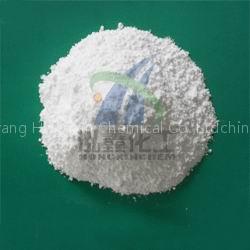
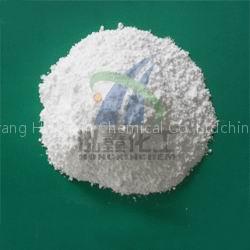
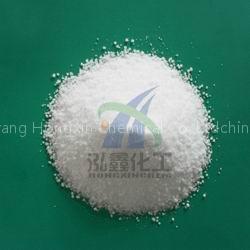
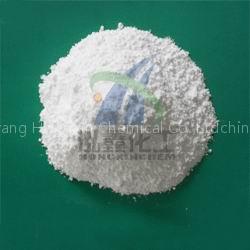
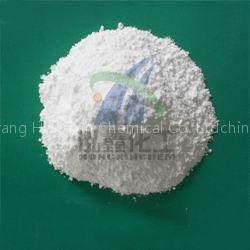
Appearance: slightly yellow crystalline powder
Assay: 95.0% min
Melting Point: 60 - 77 C
Loss On Drying: 0.5% max
Color,Gardner: 5 max (1% Sol. in toluene)
Isomer Ratio: 85 : 15 (Typical)
Flash Point: 210 C
Stability: Stable under ordinary conditions
General Description & Applications
Xanthene is a polyaromatic cyclic ether compound which have one oxygen in the ring system. Two benzene rings are fused to tetrahydropyran which is a six membered cyclic ether with five carbons and one oxygen. It is soluble alcohol and ether. Pyran ring structure is the basis of the pyranoses. Xanthene is used as a fungicide itself. But the main function is as the fundamental structure of chromophore particularly luminescent dyes. Xanthene class dyes include fluorenes, pyronins, succineins, sacchareins, rosamines, rhodamines, rhodols and fluorones. Xanthone is the xanthene ketone. It is used as an ovicide and as a larvicide. Thioxanthone is the sulfur analogue of xanthone. An sulfur atom exists on the ring system instead of an oxygen atom. Xanthene structure provides characteristic property of spectroscopic photodynamic activity. Its derivatives are widely used in biological stains, light and temperature sensitizers, photoinitiator of polymerization process, histotechnologies, photochromic and thermochromic agents and laser dyes as well as in molecular chemistry and organometallic-complexes.
Polymerization is initiated generally by free radical. There are four types of free radical initiators which initiate polymerization.
Peroxides including hydroperoxides (tertiary-butyl hydroperoxide, benzoylperoxide)
Azocompound thermal initiators (azoisobutyronitrile)
Redoxinitiators (mixture of iron(III) acetylacetonate): free radicals are formed by one-electron transferreactions. Useful in low temperature and emulsion polymerization
Photoinitiators (benzoin, benzil dimethylketal)
The main advantage of polymerization started by photoinitiators is temperature-independence and easy control. It can be conducted at very low temperatures and can be stopped simply by removing the light source. Photoinitiators are compounds that break down into free radicals upon exposure to ultraviolet radiation. Photoinitiators undergo a unimolecular bond cleavage upon irradiation to yield free radicals (benzoin esters; benzil ketals; alpha-dialkoxy acetophenones; alpha-hydroxy-alkylphenones; alpha-amino alkyl- phosphine; acylphosphine oxides). Another type of photoinitiators undergo a bimolecular reaction where the excited state of the photoinitiator interacts with a second molecule (a coinitiator) to generate free radicals(benzo phenones,amines; thioxanthones,amines; titanocenes). Photoinitiators are widely applied in UV curing inks, wood coatings, paper coatings, optical fiber, PCB, screen printing , paper varnish and other surface coatings.