99.5% White Powder Creatine Monohydrate
Specifications
- Brand
- nanjian
- Origin
- China
- Certifications
- ISO
- MOQ
- 10g
- Packaging
- as for customer's requirement
- Price Term
- EXW/EX-Work,FOB
- Payment Term
- T/T,L/C,Western Union
- Supply Ability
- 50000t/monthh
- Delivery Time
- prompt
- Loading Ports
- wuhan
- Guarantee
- within one week
99.5% White Powder Creatine Monohydrate is a Chemicals product. Key specs — Brand: nanjian; Origin: China; Certifications: ISO; MOQ: 10g.
Product Description
99.5% White Powder Creatine Monohydrate
lrj01(at)ycphar.com Skype ID: tina.lee184
Quick detail Product Name: Creatine monohydrate
Synonyms: Amidinosarcosine Monohydrate; N-carbamimidoyl-N-methylglycine hydrate (1: 1); [(diaminomethylidene)(methyl)ammonio]acetate
Assay: 99.5%
CAS No.: 6020-87-7
EINECS No.: 200-306-6
Molecular Formula: C4H11N3O3
Molecular Weight: 149.15
Melting point: 292º C
Water Solubillity: 13 g/L (20º C)
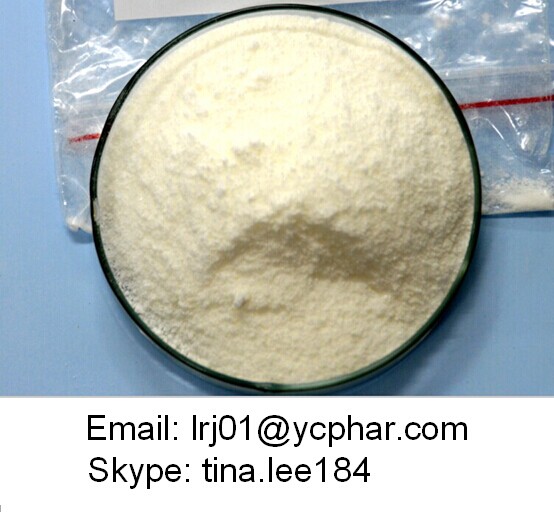
Appearance: White crystaline powder
Packing: 25kg/Drum
Application: Strength Recovery
Description
Creatine is a nitrogenous organic acid that occurs naturally in vertebrates and helps to supply energy to all cells in the body, primarily muscle. This is achieved by increasing the formation of adenosine triphosphate (ATP). Creatine was identified in 1832 when Michel Eugè Ne Chevreul isolated it from the basified water-extract of skeletal muscle. He later named the crystallized precipitate after the Greek word for meat. Early analysis showed that human blood is approximately 1% creatine, and the highest concentrations are found in animal blood, brain (0.14%), muscle (0.50%), and testes (0.18%). The liver and kidney contain approximately 0.01% creatine. Today, creatine content (as a percentage of crude protein) can be used as an indicator of meat quality.
In solution, creatine is in equilibrium with creatinine.
Creatine is a derivative of the guanidinium cation.
Application
1. Used as a supplement
Creatine has been shown to be an effective antioxidant with supplementation alone and also when associated with resistance training.
Creatine supplements are used by athletes, bodybuilders, wrestlers, sprinters, and others who wish to gain muscle mass, typically consuming 2 to 3 times the amount that could be obtained from a very-high-protein diet. The Mayo Clinic states that creatine has been associated with asthmatic symptoms and warns against consumption by persons with known allergies to creatine.
2. Treatment of diseases
Creatine has been demonstrated to cause modest increases in strength in people with a variety of neuromuscular disorders. Creatine supplementation has been, and continues to be, investigated as a possible therapeutic approach for the treatment of muscular, neuromuscular, neurological and neurodegenerative diseases (arthritis, congestive heart failure, Parkinson's disease, disuse atrophy, gyrate atrophy, McArdle's disease, Huntington's disease, miscellaneous neuromuscular diseases, mitochondrial diseases, muscular dystrophy, and neuroprotection), and depression.
A meta analysis found that creatine treatment increased muscle strength in muscular dystrophies, and potentially improved functional performance. It has also been implicated in decreasing mutagenesis in DNA.
3. To improve cognitive ability